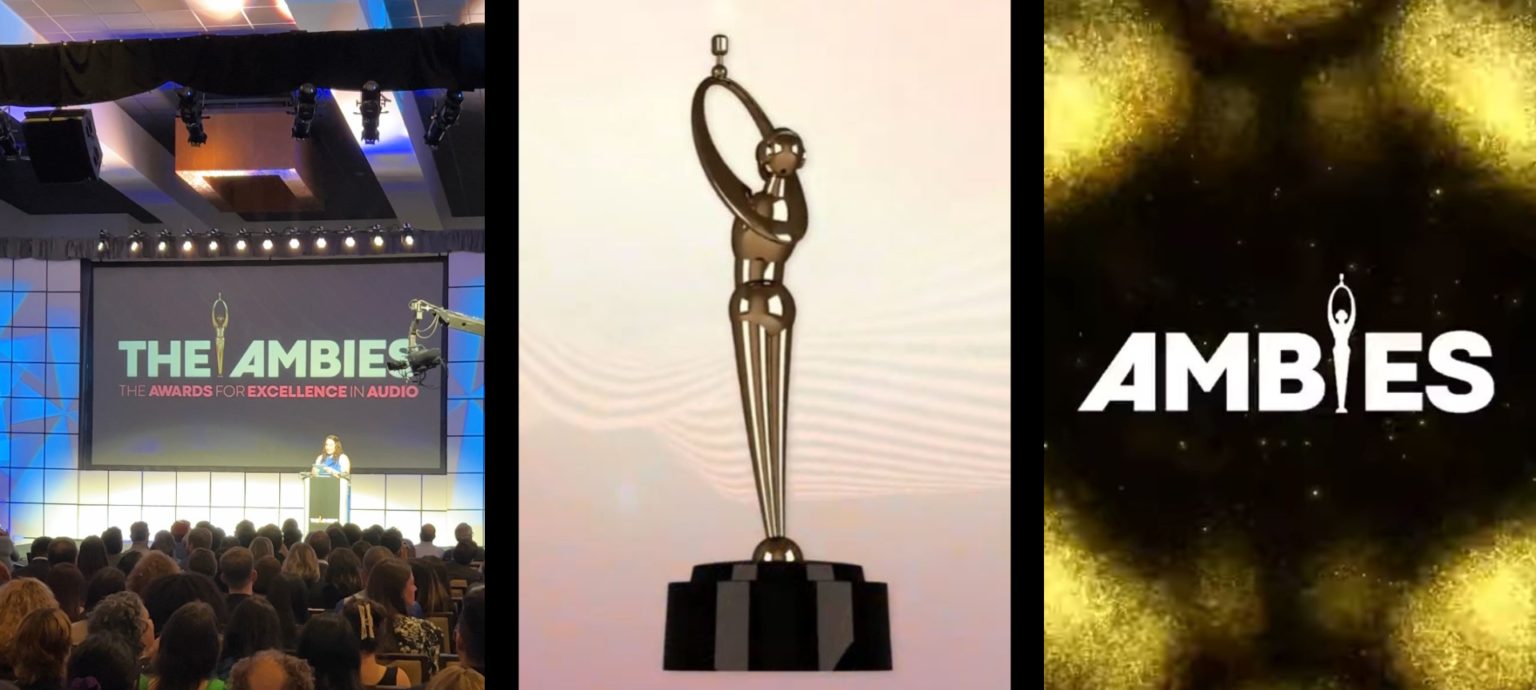
Awards shows do not fail because of a single bad decision. They fail because of accumulated ones. The 2026 Ambies, presented by the Podcast Academy, arrived carrying weight that had been building long before a single winner was announced, and a historic winter storm ensured that more people than ever were watching when that weight came due.
Flights were canceled by the thousands. Streets went unplowed. A state of emergency was declared in several states across the East Coast. The ceremony was pushed back by a full day. In isolation, none of that is the Podcast Academy’s fault. Weather is not a production decision. But the optics of a few winners being vocal about the difficulty of traveling from as far as Harlem or other boroughs felt notably out of touch, particularly given that in past years, attendees have flown in from across the country. The comparison was obvious.
What occurred before, during, and after the broadcast, raises questions and issues that deserve honest examination, particularly from a show positioning itself as the gold standard of podcast recognition.
Time Does Not Always Fly By
The livestream opened nearly 40 minutes before anything actually happened. To be precise: 39 minutes and 44 seconds of holding animation preceded the first moment of programming.
Starting a livestream early is standard practice. A 5- to- 15 minute buffer is accepted, expected, and forgiven. But the gap between accepted practice and what aired is significant, and the absence of a countdown made it considerably worse.
Context matters.. The 2024 Ambies livestream opened with a countdown clock already running at 16 minutes and 11 seconds, giving viewers a clear and deliberate signal of exactly when the show would begin.

The 2025 version ran 23 minutes and 33 seconds of pre-show without a countdown either, but offset that with a visually compelling holding loop that was polished and what you would expect from a high-level awards production. The contrast with 2026 is difficult to ignore.

The 2026 version offered neither the countdown nor the polish. And that is the part that is hardest to understand. The framework already existed. The visual assets had already been built. Refreshing a looping animation for a new year, swapping a color palette, updating typography, and changing a date is not a significant production lift. Instead, early viewers received nearly 40 minutes of holding slate that felt like an afterthought or a problem not worth addressing rather than a deliberate creative choice.

There is also a practical algorithmic argument against letting that dead time remain in the final upload. Pre-show padding that is not timestamped or edited out hurts audience retention metrics on YouTube.

The Podcast Academy reupload the video approximately 23 hours later with a different title, description, and thumbnail, suggesting a deliberate effort to reframe the broadcast. However, after that reupload was noticed, documented, and screenshotted, the video was subsequently unpublished. It is no longer visible on the channel. The original livestream remains the only publicly available version, complete with its rough edges intact and without the trimmed pre-show the reupload appeared to address. A quiet reupload with updated metadata, followed by the video being pulled once it had been captured, raises questions that a simple technical explanation may not fully answer.

Audio Problems at an Audio Awards Show
Once the show got underway, beginning after 8:10 pm EST and already ten minutes behind the originally scheduled 8:00 pm start, the technical issues did not stop. A noticeable audio lag persisted through the first portion of the broadcast, which often makes a viewer question his or her device.
At a ceremony dedicated to celebrating audio production, it borders on symbolic.
To their credit, the Podcast Academy acknowledged the issue in the live chat at the 49-minute mark, confirming the team had been alerted and was working on a resolution. The lag was reportedly corrected at approximately the one-hour-and-24-second mark. The transparency was appreciated. But the damage to the first hour of the loftiest night in podcasting had already been done.
A secondary issue compounded the experience throughout: a consistent lag between podcast names being announced verbally and their titles appearing on screen, adding another layer of visual disconnect. For an audience that works in audio production professionally, these are not small details.
The Opening That Did Not Open Anything
When the show finally got moving, the live chat was already restless. Comments had been accumulating before the first category was even announced: @Ronmacd17 “this is a long open,” @tiffanykope “very long opener,” @thestrangethingabout “very very,” and perhaps most directly: @amymchar “feedback for future ambies… not this.”
An awards show opening has one essential purpose: generate excitement and anticipation for what is about to be presented. When the audience is watching the clock and commenting on length before the first award has been given, the opening did not achieve its goal.
The host did not appear to read from a teleprompter, which can work beautifully when the remarks seem natural and commanding. Here, it occasionally veered into territory that felt unexplored with extended rants, tangents about his agent, and a moment where he noted that not everyone in the room was going to win an award.
One viewer in the chat summarized it plainly: @decorateddates3391 “He’s having himself a night.”
The recurring DJ air horn sound effect, deployed as a motif throughout the evening, wore out its welcome quickly. What might have landed as punchy and energetic the first time became grating by the fourth and fifth use, a particularly awkward creative choice for an audience that lives and breathes audio production.
DJ Donwill did have a genuinely strong moment: taking a clip from each winning podcast, largely built around the show’s intro, remixing it and playing it after the winner was announced. It was a creative touch, and one that likely landed well in the room. That instinct is exactly right.The ceremony just needed more of that energy and less of the air horn.

Past ceremonies featured an opening music segment that namedrops shows from across the podcasting landscape woven together in a way that felt like a love letter to the medium. Its absence in 2026 was felt. Instead, we were given silence and the loss of an opportunity.
One final note on the evening’s recurring texture: UTA was mentioned so frequently throughout the show that one could be forgiven for wondering whether there was a per-mention arrangement in place. UTA, by some measures, may have emerged as the night’s winner.
What the Category Selection Says
The Ambies spans 33 categories. The ceremony consolidated the best knowledge, science, and technology categories into a single award. These are distinct and thriving genres of podcasting, each deserving its own recognition. The Podcast Academy has the ability to conduct direct outreach to fill underrepresented categories. Science and technology are precisely where that energy should be directed.

Pacing became increasingly uneven as the evening progressed. Early categories received generous presentation time. Later ones were rushed or skipped almost entirely. Best history, audio fiction, comedy, scriptwriting in both fiction and nonfiction, and society and culture were all short shrift. Further in, at around the one-hour-and-57-minute mark, best branded podcast, DIY podcast, original score and music composition, use of video in a podcast, and wellness or relationship podcast were among those that received little to no airtime.

The live chat reflected the pacing issue acutely. Viewers were vocal about acceptance speeches being bypassed entirely, a meaningful frustration, and a particularly awkward one given that the same show had already given an acceptance speech earlier in the evening. Dedicating substantial time to presenters pitching their own categories, while rushing through the actual winners is a prioritization problem the show’s producers need to take seriously.

One category provided a genuine bright spot. Best production and sound design, sponsored by Dolby, was the kind of alignment that feels earned rather than transactional. The sponsorship fit was natural, added real weight to the category; including audio bites and mixed music from the winning podcasts was a thoughtful and resonant touch. It is the template the rest of the show could benefit from.
Closed captions were absent throughout, an accessibility oversight that a show of this stature should not be making in any year.
The Comment Section That Closed
A smaller detail only becomes clear on a second watch. During the livestream itself, comments were running, with viewers reacting in real time as the show unfolded. Once the stream ended, comments were disabled.
Checking the last five videos on the channel and every previous Ambies livestream on YouTube confirms the pattern: comments were allowed after the stream concluded in every prior year. The 2026 broadcast is the sole exception. Whether the decision was a deliberate response to what was accumulating in the live chat, or simply a configuration oversight, is impossible to say with certainty. The outcome is the same either way.
The 2026 live stream crossed 2,000 views within just three hours of the broadcast, roughly double the total view count the 2025 stream accumulated in its entirety. It has the potential to be the most-watched Ambies livestream ever. Disabling the comments was a bold decision.

Credit Where It Is Due
It would be incomplete not to acknowledge what worked. The red carpet and photo backdrop setup for the 2026 ceremony was a visible step up from past years, a meaningful achievement given a winter storm bearing down on the venue. In the social media era, a polished red carpet moment with an award in hand is worth considerably more than a digital graphic confirming someone won. For nominees who traveled to be in that room, the ability to walk away with a photo that says something has real and lasting value.
What It Means for the Ambies
Underlying the ceremony is a tension the Podcast Academy will eventually need to resolve. The instinct to make the Ambies feel hipper, cooler, and more culturally resonant is not wrong. But there is a meaningful difference between an awards show that is warm, entertaining, and full of personality and one that feels like a late-night sketch decided to host a ceremony as a bit.
Drinking, swearing, and sexual references surfaced multiple times throughout the broadcast. This is less the problem when they come from winners in an unguarded moment of genuine celebration. It becomes a more serious issue when they originate from the host of the ceremony. For brands evaluating advertising or partnership opportunities, these distinctions are not abstract. Brand safety is a practical consideration, not a theoretical one. The environment an awards show creates reflects the values of the brand. Ad buyers notice. Having advised major brands on podcast strategy including in an advisory capacity to Indeed’s Offline Ads Team, I’ve seen firsthand how quickly a perception can form and how slowly it fades. A show that wants to attract serious advertising partners needs to be deliberate and cautious about the atmosphere it is creating.
There is also a broader structural question. We will never fully know how the ceremony might have looked had the Podcast Academy chosen to move the event to later in the year alongside Podcast Movement, which is also happening in New York City, or attached itself to an event that draws a wider audience beyond public broadcasting institutions like NPR, PRX, and CBC. On Air Fest has its own real advantages, but unless you live in the tri-state area, have an unlimited conference budget, or work in public broadcasting, it is unlikely to sit at the top of the list when weighed against Podcast Movement, Advertising Week, Podfest, VidSummit, VidCon, The Podcast Show London, and other events.
The Bigger Picture
The 2026 Ambies is not the story of a show that never had it together. The creative capability is proven. Past ceremonies demonstrated that the Ambies are capable of moments that feel genuinely special, including the opening music segment that weaves show names from across the podcasting world into something that feels celebratory of the medium itself, not just the nominees. It was notably absent this time around.
Which is exactly why 2026 stings. In area after area, pre-show production, audio sync, category pacing, accessibility, and community engagement, the show delivered less than what preceded it. This is not a stumble. This is a regression from a proven high watermark; regressions in organizations with demonstrated capability deserve honest and thorough examination. The audience is there, the talent is there, and the industry the Ambies is meant to celebrate has earned better than what this particular Thursday night delivered.
The storm did not create these problems. It just insured more people than ever were watching when they arrived.

Those who have followed the Ambies over the years know what the show is capable of producing. There have been moments that felt genuinely special, the kind that remind you why the podcasting industry deserves this kind of recognition.

2026 felt like a step away from that. Not a collapse, but a drift. away from the details that made past ceremonies outstanding, away from the orientation toward the work and the people behind it. Toward something louder and less defined. The Ambies cannot simultaneously claim the cultural authority of the Oscars and run the atmosphere of a late-night showcase. The show has to decide what it is and, more importantly, what it wants to become.
The good news is that drift is correctable. The audience is growing. The foundation is there. And anyone who has watched the Ambies at their best knows the show has the capacity to find its way back to what made it worth celebrating in the first place.
The author covers the podcast awards and recognition space and serves in an advisory capacity on podcast strategy to major brands. All timestamps and viewer figures cited are drawn from the publicly available Podcast Academy livestream recording.